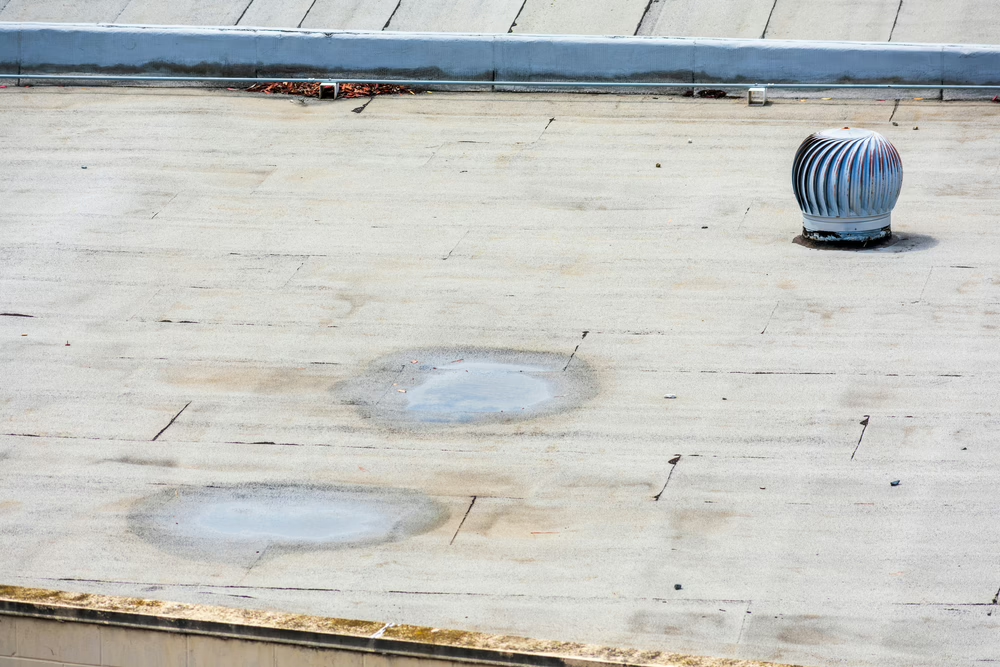

You walk onto your commercial roof after a rainstorm and notice puddles scattered across the surface. Some are small, others span several feet, and they’re all just sitting there like miniature ponds reflecting the sky above. The real question isn’t whether water is pooling on your flat roof, but rather how long it stays there and what that persistence tells you about the structural integrity underneath.
Understanding the difference between acceptable drainage timing and problematic ponding could save you thousands in unnecessary repairs or prevent catastrophic damage you didn’t see coming.
What Actually Qualifies as Ponding Water
Ponding water is defined as water that remains on a roof surface for more than 48 hours after precipitation or snowmelt ends. That 48-hour window accounts for normal evaporation rates, allows time for drainage systems to clear, and recognizes that perfectly flat surfaces don’t exist in real-world construction.
Even roofs described as “flat” aren’t actually flat. They’re designed with a minimum slope of one-quarter inch per foot to encourage water movement toward drains, scuppers, or roof edges. Variations in the building structure, settling over time, compression of insulation layers, and thermal expansion of roofing materials all create micro-depressions where water naturally collects.
When you see water on your roof immediately after rain, that’s not ponding. That’s just water finding the lowest point and sitting there temporarily while gravity and drainage systems work together to move it off your building. The problem begins when that water refuses to leave.
The Timeline That Separates Normal from Problematic
Water behavior on your roof tells a story, and the timeline reveals whether that story has a happy ending or heads toward expensive repairs.
- Hour 0-6 After Rainfall: Water covering portions of your flat roof is completely normal. Your drainage system is actively working, and roof drains are processing volume. Large puddles during this period don’t indicate problems.
- Hour 6-24 After Rainfall: Most shallow water should have drained by now. If you’re still seeing widespread water coverage across large sections of roof rather than isolated areas, this suggests your drainage system may be undersized, partially blocked, or your roof slope is inadequate.
- Hour 24-48 After Rainfall: Only isolated low spots should retain water at this point, and even those should be visibly shrinking through evaporation. If you’re seeing the same water depth and coverage as you did at the 24-hour mark, you’ve crossed into concerning territory.
- Beyond 48 Hours: This is officially ponding water, and it demands attention. The membrane beneath that water is now experiencing accelerated aging, potential freeze-thaw damage if temperatures drop, and increased risk of leaks as the standing water finds any weak points in your roofing system.
Why Some Ponding Is More Dangerous Than Others
Not all ponding water creates equal risk. The location, depth, and frequency of water accumulation all factor into how urgently you need to address the issue.
Shallow ponding (less than one inch deep) in isolated areas that drains within 72 hours occupies a gray zone. It’s not ideal, but many commercial roofs live with minor ponding for years without experiencing failures, though this water does accelerate membrane aging in those specific areas.
Deep ponding (more than one inch deep) that persists beyond 48 hours creates serious problems:
Membrane Degradation Accelerates
- TPO, EPDM, and PVC membranes suffer accelerated UV degradation when covered by water that magnifies sunlight
- Constant moisture exposure breaks down adhesives and sealants faster than normal weathering
- Biological growth (algae, moss) establishes in standing water, creating additional membrane stress
- Membrane plasticizers leach out faster when submerged, making the material brittle over time
Structural Stress Compounds
- Even an inch of standing water weighs approximately five pounds per square foot
- Large ponding areas can add thousands of pounds of constant load to roof structures
- This persistent weight causes insulation compression, which creates even deeper depressions
- The cycle becomes self-reinforcing: ponding compresses insulation, creating deeper ponds, adding more weight
Leak Risk Multiplies
- Standing water finds every tiny penetration, seam imperfection, and fastener hole
- Freeze-thaw cycles turn ponded water into expanding ice that forces seams apart
- Debris accumulates in ponding areas, holding moisture against the membrane
- Each rain event adds fresh water before previous water fully drains, creating near-permanent wetness
Identifying the Root Causes of Persistent Ponding
When you’ve confirmed that water is truly ponding on your commercial roof, the next question is why. Understanding the cause determines the appropriate solution and helps you avoid wasting money on fixes that don’t address the actual problem.
The five most common causes of ponding water on commercial flat roofs include:
- Inadequate Roof Slope – Your roof was built without sufficient pitch to move water effectively, a design or construction issue that may have worsened as the building aged.
- Structural Deflection – The building’s structure has sagged or settled over time, creating low spots that didn’t exist originally. This is particularly common around roof penetrations or along unsupported spans between structural members.
- Compressed or Damaged Insulation – The insulation layers beneath your roofing membrane have compressed from foot traffic, equipment weight, or moisture intrusion, creating depressions where water collects.
- Blocked Drainage Systems – Your drains, scuppers, or gutters are partially or fully blocked by debris, preventing water from leaving the roof at its designed rate.
- Undersized Drainage – Your roof’s drainage system was never adequate for the roof area and rainfall intensity in your region, meaning even a functioning system can’t keep up with water volume.
Determining which cause applies to your roof requires an assessment from professional roofers in Langhorne or elsewhere, but you can gather clues by observing patterns. Does ponding occur in the same locations after every rain? That suggests structural issues. Does water drain eventually but take too long? That points toward drainage problems. Does ponding worsen over time? That indicates progressive structural deflection or insulation compression.
When Ponding Water Qualifies as “Acceptable”
Some degree of ponding doesn’t automatically require expensive corrective action. The industry acknowledges that minor ponding is nearly inevitable on large flat roof surfaces.
Ponding water might be acceptable when all of these conditions are met:
Acceptable Ponding Criteria:
- Water depth remains under one inch
- Water drains completely within 72 hours in most weather conditions
- Ponding areas are isolated rather than widespread across the roof
- The affected membrane shows no signs of degradation or damage
- Ponding doesn’t occur over seams, penetrations, or vulnerable roof details
- You have a maintenance plan to monitor the areas regularly
However, even “acceptable” ponding should be monitored rather than ignored. Smart property owners document ponding locations, measure approximate depths, and track whether the situation is stable or worsening over time.
Solutions That Actually Address Ponding Problems
When ponding exceeds acceptable parameters, you have several options. The right solution depends on the underlying cause and the severity of the problem.
Drainage System Solutions
If your ponding results from blocked or undersized drainage:
- Clean and Clear Existing Drains – Remove debris from drains, downspouts, and scuppers. Install drain strainers to prevent future blockages.
- Add Additional Drains or Scuppers – Increase drainage capacity by installing new drain locations in ponding areas.
- Install Secondary Overflow Drains – Add emergency overflow drains at elevations slightly above primary drains to handle heavy rainfall volume.
Structural and Slope Solutions
When ponding results from inadequate slope or structural issues:
- Tapered Insulation Systems – Install tapered insulation layers that create positive slope toward drains. This is one of the most effective long-term solutions for ponding caused by flat or negatively-sloped roof sections.
- Crickets and Saddles – Build raised sections around roof penetrations and equipment to divert water away from areas prone to ponding.
- Structural Reinforcement – In cases where roof deck deflection causes ponding, structural engineers may recommend adding support to prevent further sagging.
Membrane and Coating Solutions
For moderate ponding on roofs nearing replacement age:
- Roof Coatings – Apply reflective coatings over existing membranes in ponding areas to slow UV degradation and seal minor imperfections.
- Membrane Overlay Systems – Install new membrane over existing roof with tapered insulation to create improved drainage without full tear-off.
Quick Reference: Normal vs. Problematic Ponding
| Factor | Normal Drainage | Concerning | Immediate Action Required |
| Water Depth | Less than 1 inch | 1-2 inches | More than 2 inches |
| Duration After Rain | Drains within 48 hours | Persists 48-72 hours | Persists beyond 72 hours |
| Coverage Area | Isolated low spots | Multiple areas, <25% of roof | Widespread, >25% of roof |
| Frequency | Occasional after heavy rain | After moderate rainfall | After even light rainfall |
| Seasonal Pattern | Worse in spring/fall | Year-round presence | Growing larger each season |
| Membrane Condition | No visible damage | Minor discoloration | Visible deterioration, algae growth |
| Structural Signs | None | Slight visible deflection | Obvious sagging, interior ceiling issues |
The Cost of Ignoring Persistent Ponding
Property owners often delay addressing ponding water because the roof isn’t actively leaking yet. This is financially risky. Ponding water creates a progressive failure cycle that accelerates over time.
Progressive Damage Timeline:
- Year 1-2: Standing water begins degrading membrane in affected areas
- Year 3: Weakened sections develop small leaks requiring repairs
- Year 4: Water weight compresses insulation, creating deeper ponds
- Year 5: Structural deflection possible, widespread membrane failure in formerly-ponding areas
By year five, you’re not just dealing with localized leak repairs. You’re potentially facing structural issues, widespread membrane failure, and a roof that can’t make it to its expected 20-year lifespan. The total cost of this neglect typically runs five to ten times what early intervention from a qualified roofing company in Washington Crossing or beyond would have cost.
Conversely, property owners who address ponding issues when first identified through added drainage, tapered insulation, or other appropriate solutions typically see their roofs reach or exceed expected service life.
Taking Action on Your Commercial Roof Ponding Issues
If you’re seeing persistent ponding on your commercial flat roof, the time to act is before the water turns into leaks, structural damage, or premature roof failure. Martin Roofing & Construction has decades of experience with commercial roofing systems including TPO, EPDM, PVC, and modified bitumen, and we understand the specific drainage challenges that flat and low-slope roofs present.
Our team can assess instances of ponding, identify the root causes, and recommend solutions that fit your budget while protecting your building long-term. Contact Martin Roofing & Construction today for a professional roof assessment and let us help you determine whether your ponding water falls within acceptable limits or requires intervention to protect your investment.