When you compare line items in your winter maintenance budget, professional roof snow removal might look like a discretionary expense. Your commercial roof has weathered previous winters, and the investment in preventative service feels negotiable.
But property owners who skip this protection often discover an expensive truth: the cost of repairing structural damage from snow accumulation far exceeds what prevention would have cost. Every snowfall adds weight that your roof wasn’t designed to carry indefinitely, and the tipping point between manageable load and catastrophic failure happens faster than most building owners expect.
The Weight of Winter on Commercial Roofs
Snow looks light and fluffy as it falls, but don’t let appearances fool you. The numbers tell a different story, and understanding them can save you from catastrophic losses.
Fresh, powdery snow weighs approximately five pounds per cubic foot. That sounds manageable until you do the math on a large commercial roof. But the real danger comes after the initial snowfall. When snow gets wet from rain or melting, it absorbs water like a sponge, pushing the weight up to 20 pounds per cubic foot.
The worst situation happens during freeze-thaw cycles, when that saturated snow refreezes into dense ice. At that point, you’re dealing with up to 60 pounds per cubic foot bearing down on your building’s structure.
Even if you built your facility to code, age, wear, and previous maintenance history all affect how much load your roof can actually handle today versus what the blueprints promised decades ago.
How the Costs of Snow Damage Add Up
When property owners weigh the cost of snow removal against doing nothing, they often make the mistake of only considering the visible numbers. The invoice for professional snow removal service is right there in black and white. But the true cost of snow damage? That reveals itself slowly, often after the damage is already done.
Here’s what happens when excessive snow load stresses your commercial roof:
Immediate Structural Concerns:
- Metal purlins bend under sustained weight, creating permanent deformation
- Roof decking begins to sag, which you might not notice until water starts pooling
- Joints and seams separate as the structure flexes beyond design limits
- Support beams crack internally, compromising the entire building’s integrity
Long-Term Deterioration:
- Membrane systems (TPO, EPDM, PVC) stretch and tear from uneven weight distribution
- Insulation compresses and loses R-value, increasing your heating costs for years
- Fasteners pull loose from repeated stress cycles, creating future leak points
- Ponding areas form where the roof has permanently deformed, accelerating weathering
The financial impact extends far beyond just repairing the roof itself. When your commercial roof fails or shows signs of distress, you’re facing business interruption costs, inventory damage from leaks, potential liability issues if the building becomes unsafe, and the nightmare of emergency repairs at premium rates.
Insurance claims may help, but they come with deductibles, premium increases, and the hassle of proving that damage resulted from a covered event rather than deferred maintenance. When snow damage escalates to such a point, commercial roof repair in Warminster is the only option.
Breaking Down the Cost Comparison
Let’s look at the real numbers that commercial property owners face. This comparison assumes a mid-sized commercial building with a flat or low-slope roof, which is where snow accumulation creates the most risk.
| Expense Category | Professional Snow Removal | Structural Damage Scenario |
| Service/Repair Cost | $800–$2,500 per winter (multiple removals) | $15,000–$75,000+ for structural repairs |
| Membrane Replacement | Preventative protection | $5–$12 per square foot |
| Emergency Response | Scheduled, standard rates | 2x–3x normal labor rates |
| Business Downtime | Minimal (1–2 hours) | Days or weeks during repairs |
| Insurance Impact | No claim filed | Deductible + premium increase |
| Secondary Damage | None | Water damage to interior, inventory, equipment |
| Total Winter Season | $800–$2,500 | $25,000–$150,000+ |
The contrast becomes even starker when you factor in the compounding effects. One winter of snow damage rarely results in a single repair bill. Instead, that first episode of stress creates weak points that fail repeatedly in subsequent years.
You end up paying for leak repairs, then membrane patches, then more extensive restoration work as the damage spreads. What could have been prevented with regular snow removal turns into a multi-year capital expense that drains your maintenance budget.
Why Flat and Low-Slope Commercial Roofs Face Greater Risk
If you manage a commercial property with a flat or low-slope roof, you’re dealing with the most vulnerable roof type when it comes to snow accumulation. Unlike pitched residential roofs where gravity helps snow slide off, flat roofs hold every flake that falls. This creates several dangerous conditions that property owners need to understand.
First, snow doesn’t distribute evenly on flat roofs. Wind patterns, roof equipment, and architectural features create drifting zones where snow piles up far deeper than the average accumulation. You might have six inches of snow across most of your roof, but three feet behind an HVAC unit or along a parapet wall. These concentrated loads create stress points that can trigger localized failures, starting a chain reaction of damage.
Second, flat roofs are particularly susceptible to ponding water when snow melts. If your roof has any low spots (and most aging flat roofs do), melting snow collects in these areas. When temperatures drop again overnight, that ponding water freezes, creating ice dams that prevent proper drainage during the next melt cycle. This freeze-thaw pattern accelerates membrane deterioration and adds persistent weight that never fully leaves your roof between storms.
Third, drainage systems on flat roofs become critical failure points during winter. When drains, scuppers, or gutters freeze or become blocked by ice, melting snow has nowhere to go. The water weight adds to the snow weight, and your roof bears both loads simultaneously. This is when you see the most dramatic failures, because the combined weight of snow plus water can easily exceed your roof’s design capacity.
Five Warning Signs Your Roof Needs Immediate Snow Removal
Waiting until you see obvious damage is waiting too long. Smart property owners watch for these warning signs that indicate your roof is stressed beyond safe limits and needs immediate professional attention:
- Popping or Cracking Sounds from Above – These noises mean your building’s structural members are flexing under load. Metal purlins, wood beams, and roof decking all make distinct sounds when stressed. If you’re hearing these noises during or after snowfall, your building is telling you it’s reaching its limit.
- Visible Sagging or Deformation – Walk your building’s interior and look at the ceiling, particularly in large open areas without interior support columns. Any visible drooping, even slight, indicates serious structural stress that requires immediate action.
- Doors and Windows That Suddenly Stick – When excessive roof load causes your building to settle or flex, door frames and window openings shift out of square. If doors that normally operate smoothly start binding or windows become difficult to open, your building’s structure is moving under load.
- New Leaks or Water Stains During Snow Events – Leaks that appear during snowfall or immediately after indicate that weight has opened seams, pulled fasteners, or created tears in your roofing membrane. These leaks will only get worse as winter progresses.
- Water Pooling That Won’t Drain – If you notice standing water on your roof that persists for more than 48 hours after snow melts, you’ve likely developed permanent deformation. This ponding will accelerate roof aging and create problems for years to come.
The Professional Snow Removal Process Protects Your Investment
Understanding what professional snow removal actually involves helps property owners appreciate why it’s worth the investment. This isn’t just someone with a shovel climbing onto your roof and clearing snow. Professional services and commercial roofers in Hatboro follow specific protocols designed to remove dangerous weight while protecting your roofing system from damage during the removal process itself.
Experienced snow removal teams start by assessing current conditions. They measure snow depth, test snow density to calculate actual weight, identify areas of dangerous accumulation, and check for existing damage that might worsen during removal. This assessment determines the removal strategy and helps prioritize which areas need clearing first.
The removal process itself requires specialized equipment and techniques. Professionals use tools specifically designed for commercial roofing systems:
- Lightweight plastic shovels that won’t tear membrane roofing
- Snow scrapers with rubber edges for safe ice removal
- Roof-safe snow blowers for large flat areas
- Strategic leaving of a protective snow layer to prevent membrane damage from metal tools
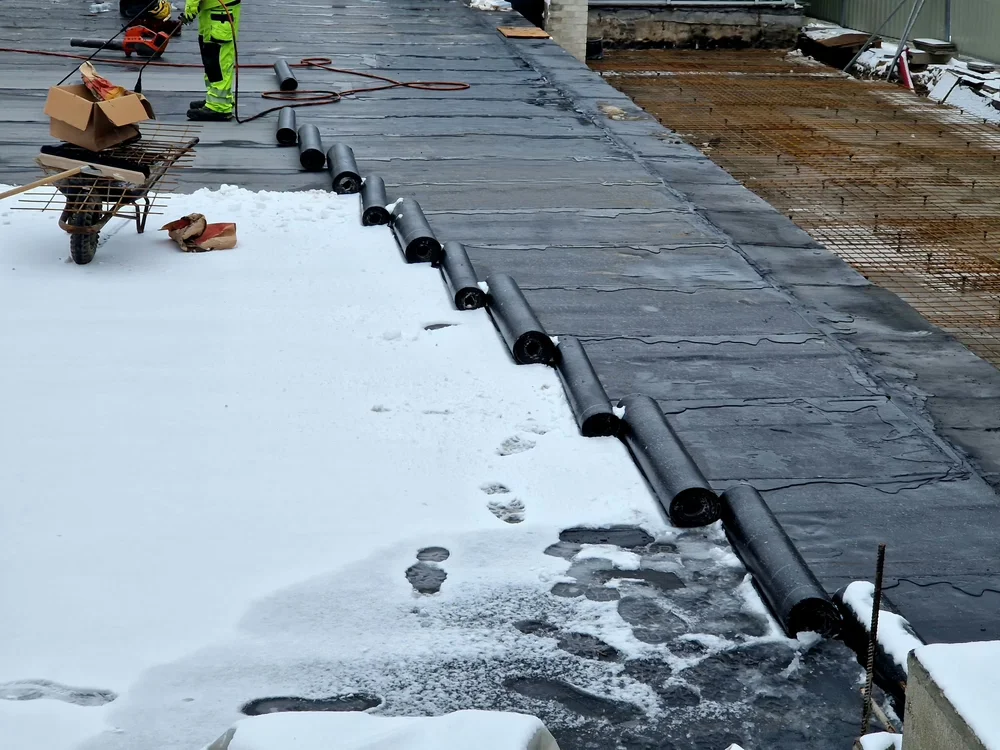
Importantly, professional crews know how to work safely on commercial roofs during winter conditions. They use proper fall protection, understand how to navigate roof penetrations and equipment, avoid damaging parapet walls and edge flashings, and can identify and work around skylights and other roof features that snow might conceal.
Perhaps most valuable is what happens after the snow is removed. Professional teams document the condition of your roof, identify any damage that occurred before removal, recommend repairs before problems worsen, and often provide photographic evidence for insurance purposes if needed. This documentation becomes crucial if you do need to file a claim or if you’re planning roof replacement in the near future.
The Bottom-Line Business Case for Prevention
Let’s return to the fundamental question: does professional snow removal save money compared to accepting the risk of structural damage? For commercial property owners, the math strongly favors prevention.
Consider a typical winter maintenance scenario. You invest in professional snow removal two to three times per winter at an average cost of $1,000 per service. Your total winter expense runs around $2,000 to $3,000. This expense is predictable, tax-deductible as a maintenance cost, and keeps your building operational without disruption.
Now consider the alternative. You save that $2,000 to $3,000 by skipping snow removal. But statistics show that commercial roofs in snow-prone regions experience significant snow-related damage approximately once every five to seven years when snow isn’t actively managed. When that damage occurs, you’re facing:
- Immediate repair costs averaging $15,000 to $75,000 depending on damage extent
- Business interruption during repairs that can cost thousands per day
- Insurance deductibles typically ranging from $5,000 to $25,000
- Premium increases that persist for years after a claim
- Potential liability if the building becomes unsafe for occupants or visitors
- Loss of inventory or equipment from water intrusion
Even if you’re fortunate and your roof holds up for five years without removal services, that one failure event will cost more than 20 years of preventative snow removal. Unlike planned maintenance, damage repairs happen at the worst possible time, usually during peak winter when emergency service rates apply and contractor availability is limited.
The business case becomes even stronger when you factor in the extended lifespan of your roofing system. Regular snow removal, combined with proper maintenance, can add five to ten years to your roof’s service life by preventing the cumulative stress and damage that accelerates aging. That extended life defers a major capital expense (roof replacement) that typically costs $5 to $15 per square foot for commercial buildings.
Making the Smart Investment in Your Property
Winter will test your commercial roof whether you’re ready or not. The only question is whether you’ll pay a little now for prevention or a lot later for repairs. Professional snow removal isn’t an optional expense when you consider the alternative costs of structural damage, business interruption, and emergency repairs. Martin Roofing & Construction brings decades of commercial roofing experience and follows industry best practices to safely remove dangerous snow loads while protecting your roofing system.
Contact us today for a facility assessment and customized snow removal strategy that keeps your building safe and your maintenance costs predictable all winter long.