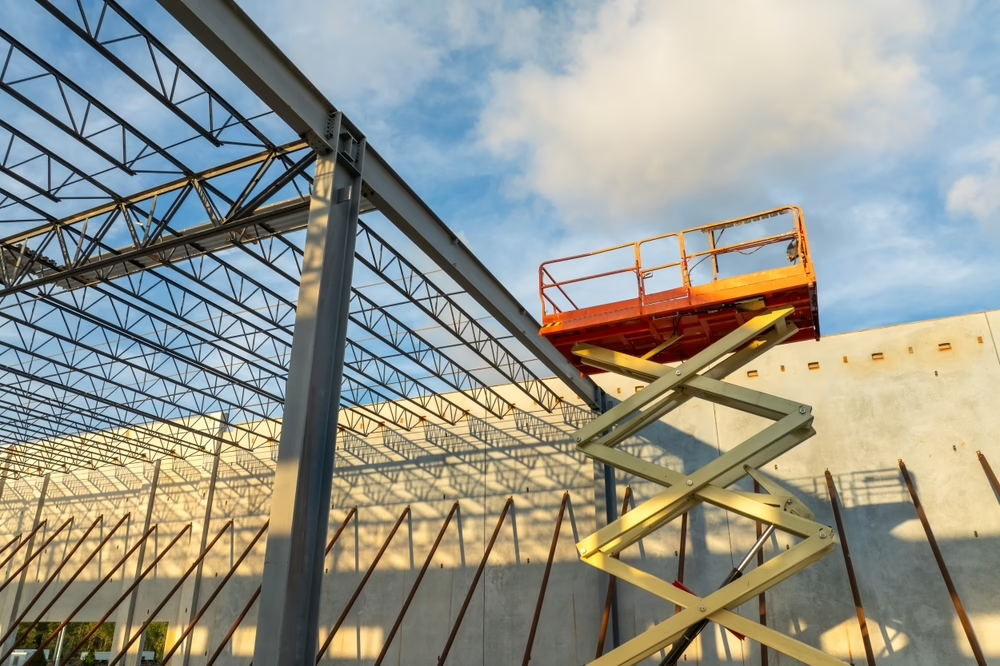

In the competitive landscape of industrial real estate, the value of a property is increasingly tied to its vertical capacity. Commercial buildings often face a difficult challenge as market demands shift toward high-volume storage and complex logistics. A warehouse built thirty years ago might sit in a prime location, but its low ceiling height makes it obsolete for modern logistics. You might wonder if you have to demolish the entire structure and start over from scratch. The answer is no, because you can physically raise the roof of an existing commercial building to gain the necessary volume.
This process is known as a roof lift. It is a sophisticated engineering solution that allows property owners to double their internal volume without the high cost or environmental waste of new construction. By severing the roof from the walls and lifting it with hydraulic jacks, you transform a functionally obsolete asset into a Class A facility. For property managers looking for a reliable roofing contractor in Bucks County, this modification offers a faster, more cost-effective route to modernization than traditional rebuilds.
Understanding the Basics of a Roof Lift
A roof lift is exactly what it sounds like. Specialized builders separate the existing roof structure from the building support columns and walls. Then, using specialized hydraulic equipment, they raise the entire roof assembly to a new, predetermined height. This method preserves the original roof deck, lighting, and fire suppression systems, which saves significant money.
The primary goal of this construction method is to increase clear height. Modern distribution centers usually require at least 32 to 36 feet of clearance to accommodate high-bay racking systems. Older buildings often offer only 18 to 24 feet, which severely limits storage capacity and leasing potential. A successful roof lift bridges this gap effectively, turning a cramped space into a high-capacity hub.
Roof Lift vs. New Construction
To help you decide which path is right for your investment, consider how a roof lift compares to the traditional “knock-down and rebuild” approach:
| Feature | Roof Lifting | New Construction |
| Cost | Typically 25% to 50% less expensive | Full market rate for materials and labor |
| Timeline | 4 to 6 months on average | 12 to 24 months |
| Permitting | Often treated as a modification | Requires full site plan approvals |
| Sustainability | High (recycles 90% of structure) | Low (heavy demolition waste) |
| Operations | Often allows for business continuity | Requires total site vacancy |
The Roof Lifting Process: Step-by-Step
The roof lifting process is a marvel of modern engineering and synchronization. It requires precise planning to maintain the integrity of the structure throughout the modification. Here is how a typical roof lift takes place on a commercial site.
- Structural Analysis and Preparation: Engineers evaluate the building to verify it can handle the new height and wind loads. Crews install new steel columns around existing ones or prepare column extensions. At this stage, experts like Martin Roofing and Construction review the existing structural health to make certain the foundation and primary supports are ready for the vertical shift.
- Separation and Equipment Setup: Workers disconnect the roof from the walls and columns. Hydraulic jacks are placed at each column point to bear the weight of the roof structure. This stage requires a delicate touch; every connection, including electrical conduits and plumbing lines, must be accounted for before the first inch of movement occurs.
- The Lifting Phase: The jacks lift the roof simultaneously, often inches at a time, until the target height is reached. Once in place, the new column sections are permanently secured. This synchronization is vital to prevent warping or structural failure.
- Enclosure and Reconnection: Once the lifting works are finished, the team reconnects the utilities and encloses the gap created by the lift. New siding or masonry is added to match the original structure. The result is a seamless exterior appearance with vastly improved interior capabilities.
Safety and Structural Feasibility
Safety is the primary concern for any property owner considering this modification. Is roof lifting safe for an older building? The answer is yes, provided that extensive structural engineering analysis occurs before any work begins. Engineers calculate the loads to guarantee the building can withstand the stresses of the lift and the increased height.
To keep the lifting safe, builders use redundant safety systems on the hydraulic jacks. The process is slow and controlled, which minimizes the risk of sudden shifts or collapses. Furthermore, the new column extensions are often stronger than the original supports, which can improve the overall stability of the facility.
Another critical factor is wind resistance. When you increase the height of a building, the wind load on the walls increases. The engineering team will design the new wall enclosures and column supports to meet current building codes, which are often stricter than when the building was first constructed. If you are researching commercial roofing in Hatboro, you will find that adhering to these modern wind and snow load codes is a mandatory part of the permitting process.
Maximizing Your Facility’s Market Value
When you increase the cubic volume of a building, you are doing more than just moving steel; you are fundamentally changing the asset class of your property. In today’s market, e-commerce and third-party logistics providers prioritize “clear height” above almost any other building feature. A building that was previously capped at a 20-foot height can only support basic racking, but by lifting that roof to 36 feet, you suddenly open the door to advanced automated storage and retrieval systems.
This vertical expansion allows you to charge higher lease rates per square foot because the tenant is getting significantly more usable space within the same footprint. Retailers looking to add mezzanine levels or manufacturers needing to install taller machinery find these modified spaces far more attractive than traditional low-slung warehouses. By investing in the height of your building, you are effectively future-proofing the asset against changes in industrial technology and tenant requirements.
Operational Advantages and Business Continuity
One of the most compelling arguments for a roof lift is business continuity. In many scenarios, operations continue inside the building while the work happens above. This is particularly true for retail or office environments where the lift might only affect a specific section of the property. Tenants do not always have to vacate, which preserves rental income for the landlord.
This approach minimizes disruption compared to a “rip and replace” strategy. If you were to demolish the building, you would lose revenue for a year or more. With a roof lift, the timeline is compressed, and the building remains partially usable. This is a massive advantage in competitive real estate markets where every day of downtime represents a significant loss in profit.
The roof lifting project also provides an opportunity to upgrade other systems. You can install modern sprinklers, better lighting, and improved insulation simultaneously. This results in a transformed building effect where the final product feels brand new. Martin Roofing and Construction notes that these secondary upgrades provide the highest return on investment when performed during a major structural change.
Sustainability and Technical Details
Modern construction places a heavy emphasis on environmental responsibility. Sustainable roof lifting solutions are inherently green because they recycle the existing structure. You are not sending tons of concrete and steel to a landfill. This method reduces the carbon footprint associated with manufacturing and transporting new building materials, making it a favorite for companies with strict ESG goals.
A sustainable roof strategy also involves improving energy efficiency. When the new wall sections are added, they are insulated to modern standards. This reduces heating and cooling costs for the tenant, making the building more attractive to environmentally conscious companies.
From a technical standpoint, the project can also address layout issues. Column removal is a frequent request during a roof lifting project. By installing longer span trusses during the lift, you can remove internal columns to create larger open spaces. This improves forklift maneuverability and flexibility for racking layouts. It is also the perfect time for structural repairs. If the original columns have damage or corrosion, they can be reinforced or replaced during the process. This extends the lifespan of the industrial building significantly. The goal is to maximize interior clear height and interior clear space for the user.
Key Considerations for Your Project Strategy
Before moving forward with a vertical expansion, it is important to develop a strategy that accounts for both the physical structure and the long-term goals of the property. A successful project begins with a deep dive into the building’s original blueprints and a thorough inspection of the current steel integrity. You must also consider how the increased height will affect your existing fire suppression and HVAC systems, as the change in volume will require recalibrating these essential services.
Navigating the local permit process is another critical step where local knowledge becomes an asset. Working with a team that understands regional building codes helps avoid costly delays during the enclosure phase. For property owners in Bucks County, Martin Roofing and Construction brings the professional expertise needed to coordinate these complex variables. They focus on the logistical details that keep a project moving, from the initial feasibility study to the final reconnection of utilities. By focusing on a collaborative approach, you can ensure the project meets both your financial expectations and your timeline.
Conclusion
Raising the roof in a commercial building modification is not only possible but often the smartest financial move for property owners. A roof lift breathes new life into aging assets, providing the clear height demanded by modern tenants. The process is safe, proven, and frequently allows operations to continue uninterrupted.
By engaging with experienced partners and understanding the lifting process, you can transform a low-value property into a high-demand facility. Whether you are looking to increase storage capacity or repurpose a retail space, a roof lift offers a competitive edge. It is a sustainable, cost-effective solution that maximizes the potential of your real estate investment. Contact us today to learn how our team can help you elevate your commercial property to its full potential.