The snow is gone. The temperatures are finally creeping back up. And as far as you can tell, your roof made it through another Bucks County winter without any problems. No leaks, no missing shingles you can see from the driveway — so you’re good, right?
Not necessarily. In our 16 years serving Bucks County homeowners, this is the exact moment we get the most urgent calls — not in January or February, but in April and May, when the first heavy spring rains turn what looked like a perfectly intact roof into a dripping ceiling.
Here’s what most homeowners don’t know: the worst roofing damage from a Bucks County winter is almost always invisible from the ground. Ice dams, freeze-thaw cycles, and heavy snow loads quietly compromise your shingles, flashing, and underlayment over months. Then spring arrives, and the rain finds every weakness your winter left behind.
In this guide, you’ll learn exactly what to look for, why it happens, and what to do about it before a small problem turns into a very expensive one.
What You’ll Learn
- What Is Hidden Winter Roof Damage — and Why It’s So Sneaky
- The Real Causes Behind Winter Roof Damage in Bucks County
- How to Spot Hidden Damage on Your Bucks County Home
- Solution Options for Bucks County Homeowners
- Why Bucks County Homeowners Choose Martin Roofing & Construction Inc.
- Frequently Asked Questions
- Next Steps
What Is Hidden Winter Roof Damage — and Why Is It So Sneaky?
Hidden winter roof damage refers to structural and material deterioration that occurs during the cold months but shows no obvious symptoms until conditions change — usually when spring rain arrives and water finally has a path inside.
Unlike a missing shingle after a summer storm (which you might actually notice), winter damage develops quietly underneath the surface. It happens inside your flashing joints, beneath your shingles, along your valleys and ridgelines, and inside your attic. By the time water stains appear on your ceiling, the damage has usually been developing for weeks or months.
Bucks County homes are especially vulnerable. Most of the residential housing stock in Yardley, Newtown, Langhorne, Warminster, and across the county was built between the 1960s and the 1990s — meaning roofing systems that are anywhere from 25 to 60 years old, or that have been through multiple replacement cycles with varying quality. Add in the specific weather patterns of a southeastern Pennsylvania winter and you have the ideal conditions for hidden roof failure.
The Real Causes Behind Winter Roof Damage in Bucks County
There isn’t just one culprit. In our 16 years of roofing across Bucks County, we’ve found that winter damage almost always comes from a combination of forces — and understanding each one helps you know what to watch for when spring arrives.
Cause #1 — Freeze-Thaw Cycling
Bucks County winters don’t stay consistently cold. We get repeated cycles where temperatures drop below freezing at night and warm above it during the day — sometimes multiple times in a single week. Every time that happens, any moisture that’s worked its way under your shingles or into small cracks expands as it freezes and contracts as it thaws.
Over a season of 20, 30, even 40 of these cycles, those micro-movements add up. Flashing pulls away from chimney bases and skylights. Shingle edges lift. Sealant cracks. The most common cause we discover on Bucks County homes after a hard winter is flashing failure that started as a hairline separation and turned into a gap wide enough to let water through.
Cause #2 — Ice Dams
Ice dams form when heat escaping through your attic warms the upper portions of your roof, melting snow. That meltwater runs down toward the eaves, where the surface is colder, and refreezes — forming a dam. More meltwater backs up behind it, and eventually that water has nowhere to go except under your shingles.
What most people don’t realize about ice dams is that by the time they’re visible from the ground as thick ice ridges along your roofline, they’ve often already been pushing water underneath your shingles for days. The water gets into the underlayment, into your decking, and sometimes into your attic insulation before you ever see a drop inside your living space.
We’ve found ice dam damage on homes in Lower Makefield, Washington Crossing, and New Hope that the homeowners had no idea about — because the water entry point was in an area of the attic that wasn’t regularly inspected.
Cause #3 — Wind and Micro-Lifting
Bucks County winters bring significant wind events — not just the occasional nor’easter but consistent cold-weather gusts that stress your roofing system in ways that aren’t dramatic enough to be obviously damaging. Wind gets under shingle edges (especially on older roofs where sealant strips have hardened) and repeatedly lifts and drops them. Each time, the bond weakens slightly. By spring, you have shingles that look intact but are no longer properly sealed — and are wide open to rain infiltration.
Cause #4 — Snow Load Stress
A significant snowfall adds real weight to your roof structure. Most well-built Bucks County homes are designed to handle typical snow loads, but years of accumulated wear on rafters, decking, and fasteners mean that stress shows up in unexpected ways. We often find fasteners that have backed out slightly after a heavy snow year, creating small penetration points that weren’t there the previous fall.
How to Spot Hidden Damage on Your Bucks County Home
You don’t need to climb on your roof to get a meaningful picture of its condition. Here’s a practical self-assessment you can do from the ground and inside your home.
Check Your Attic First
Go up there with a flashlight on a sunny day and look for daylight coming through the decking — any point of light is a point of entry. Look for water staining on rafters or insulation, and check whether your insulation feels damp or compacted in any area. A musty smell is also a red flag.
Look at Your Gutters and Downspouts
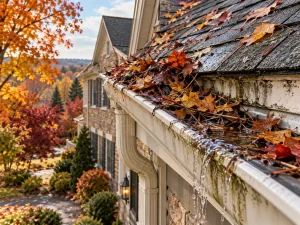
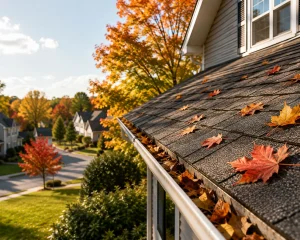
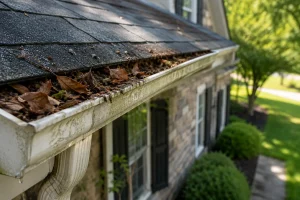
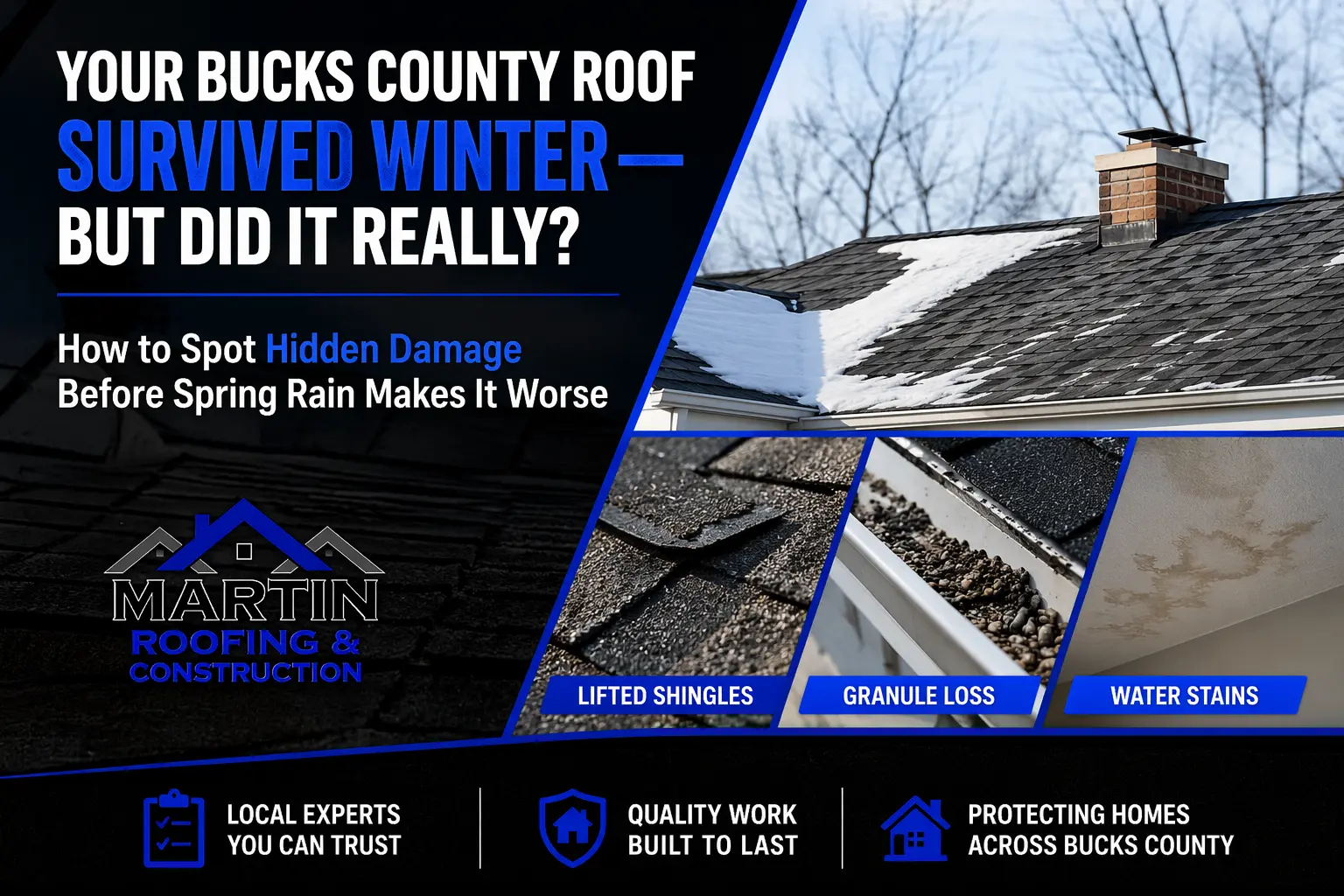
If you find a significant amount of granules — the rough, sand-like material on the surface of asphalt shingles — sitting in your gutters after winter, that’s a sign your shingles are past their prime. Some granule loss is normal. A large collection of them is not.
Inspect from the Ground with Binoculars
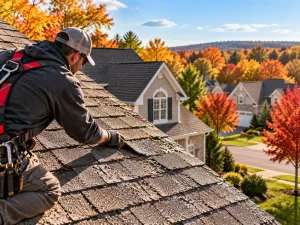
Look for shingles that appear lifted, curled, or out of plane with the rest of the roof. Check the flashing around your chimney, skylights, and roof valleys for visible gaps or rust staining. Look at your ridge line — it should be straight. Any sagging or waviness can indicate structural movement.
When to Call MRC
If your roof is 15 years old or older, if you’ve had any ice dam activity this past winter, or if you notice any of the signs above — don’t wait for a visible leak. Call Martin Roofing & Construction Inc. at 215-696-1033 for a free professional inspection. We’ll tell you exactly what we find, no pressure and no upsell.
Solution Options for Bucks County Homeowners
Option 1 — Targeted Roof Repair
If your roof is relatively young — under 15 years old — and the damage is isolated to a specific area like a flashing failure or a handful of compromised shingles, a targeted repair is usually the right call. This involves replacing or resealing the damaged components without disturbing the rest of the system.
At Martin Roofing & Construction Inc., we complete most repair work in a single visit. We document what we find, explain exactly what needs to be done, and give you a clear cost before we start. Most repairs in Bucks County range from $500 to $1,500 depending on the scope.
Option 2 — Full Roof Replacement
If your roof is 15–20+ years old, has widespread shingle granule loss, multiple flashing failures, or has been through several rounds of repairs, replacement is almost always the more cost-effective long-term decision. Patchwork on an aging system is like putting new tires on a car with a failing engine — you’re buying time, not solving the problem.
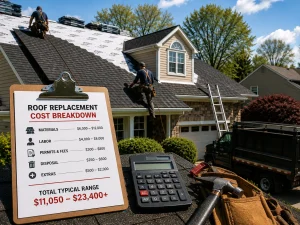
Martin Roofing & Construction Inc. installs GAF roofing systems — the same manufacturer that certifies us at the Gold Elite level, their highest tier for contractor quality. Most residential roof replacements in Bucks County are completed in a single day. Average cost runs $8,000–$15,000 depending on size, pitch, and materials.
Why Professional Assessment Matters
The reason DIY roof inspection has its limits is the same reason hidden winter damage is so common — the damage isn’t where you can easily see it. Our team knows exactly where to look on a Bucks County home after a hard winter: the north-facing slopes, the flashing at every penetration point, the valley systems, and the attic. A professional inspection takes 30–45 minutes and gives you an honest, documented picture of your roof’s actual condition.
Every inspection we do comes with our 20-Year Workmanship & Labor Warranty on any repair or replacement work, plus GAF’s Lifetime Manufacturer’s Warranty on qualifying systems. That’s protection you don’t get from a patch job by an unlicensed contractor.
Why Bucks County Homeowners Choose Martin Roofing & Construction Inc.
Martin Roofing & Construction Inc. has been serving Bucks County homeowners since 2009. We’ve replaced and repaired roofs in Yardley, Newtown, Langhorne, New Hope, Warminster, Doylestown, Levittown, and communities across the county — including just over the river in Ewing and Lambertville, NJ.
Here’s what makes us different from the bigger regional names:
- GAF Gold Elite Certified — the highest tier of residential and commercial certification GAF awards. Only a small percentage of contractors qualify.
- On-Site Project Manager on Every Single Job — Darin or Andy personally oversees your project from start to finish. No subcontracting the work out and walking away.
- Service-Disabled Veteran-Owned Small Business (SDVOSB) — VA verified. When you hire MRC, you get military-level accountability and straight talk.
- Google Guaranteed — background checked and verified by Google. That badge means something.
- 9 Google Rating with nearly 100 reviews from Bucks County homeowners — neighbors who’ve been exactly where you are.
- Flexible financing through Service Financing — easy application, fast approvals, manageable monthly payments.
- 20-Year Workmanship & Labor Warranty on every job, plus GAF Lifetime Manufacturer’s Warranty on qualifying systems.
We’re a family-owned business. Our overhead is lower than the big regional competitors, which means we can offer quality workmanship at competitive prices without cutting corners. That’s the MRC difference.
Frequently Asked Questions
How much does roof replacement cost in Bucks County, PA?
Most residential roof replacements in Bucks County range from $8,000 to $15,000 depending on the size of the roof, pitch, and materials selected. Martin Roofing & Construction Inc. provides free, detailed estimates — no surprises, no pressure. Call 215-696-1033 to schedule yours.
How long does roof replacement take?
Most residential roof replacements are completed in a single day. Martin Roofing & Construction Inc. keeps an on-site project manager — Darin or Andy — on every job to make sure the work moves efficiently and correctly from start to finish.
How do I know if I need a roof repair or a full replacement?
If your roof is under 15 years old and the damage is isolated, a repair is often the right move. If it’s 15–20+ years old, has widespread granule loss, multiple failing flashings, or a history of repeated repairs, replacement is usually more cost-effective over the long term. We give you an honest assessment — and we’ll tell you if a repair is all you need.
Does Martin Roofing offer financing?
Yes. Martin Roofing & Construction Inc. offers flexible financing through Service Financing. Easy application, fast approvals, and manageable monthly payments. Ask about your options when you call 215-696-1033.
What roofing materials are best for Bucks County’s climate?
For Bucks County’s combination of hard winters, freeze-thaw cycling, and humid summers, we recommend GAF’s architectural shingle systems — specifically those rated for higher wind speeds and with enhanced granule protection. As a GAF Gold Elite Certified contractor, we have access to the full range of GAF products and can help you choose the best system for your home and budget.
How long does a roof last in Bucks County?
A properly installed quality shingle roof in Bucks County should last 25–30 years under normal conditions. Bucks County’s harsh winters and freeze-thaw cycles can shorten that lifespan on older or lower-grade systems. Regular inspections every 3–5 years help you get the most out of your roof.
Is Martin Roofing & Construction Inc. licensed and insured in PA?
Yes. Martin Roofing & Construction Inc. holds PA License #PA116467 and is fully insured throughout the Tri-State Area (PA, NJ, and the greater region). We are also Google Guaranteed and GAF Gold Elite Certified.
What areas in Bucks County do you serve?
We serve all of Bucks County including Yardley, Newtown, Langhorne, New Hope, Lower Makefield, Upper Makefield, Washington Crossing, Warminster, Hatboro, Feasterville-Trevose, Bensalem, Doylestown, Levittown, and all surrounding communities within a 30-mile radius of Yardley, PA — including parts of Montgomery County, PA and Mercer County, NJ.
Next Steps — Don’t Wait for a Leak to Tell You
If your Bucks County home is 15 years old or older — or if this winter brought heavy snow, ice dams, or repeated freeze-thaw cycles — here’s what to do right now:
- Schedule a free professional roof inspection with Martin Roofing & Construction Inc. before the spring rain season is in full swing.
- Check your attic for daylight, moisture staining, or musty odors — these are the first signs of winter damage.
- Look at your gutters for excess granule buildup, and scan your roofline from the ground for lifted or out-of-plane shingles.
- If anything looks off, call us. We’ll come out, assess the situation honestly, and tell you exactly what you’re dealing with — no pressure, no upsell.
Call Martin Roofing & Construction Inc. today: 215-696-1033
Request a free estimate online: https://mrc-roofing.com/
We respond promptly and serve all of Bucks County and surrounding areas. Hours: 7:00 AM – 7:00 PM, 7 days a week. Financing available through Service Financing — flexible monthly payments, easy application, fast approvals.