Your metal roof looks perfect on day one. The installation crew finishes in record time, everything gleams in the sunlight, and you’re thrilled with your investment. But then five years pass, and after a spring rain, you notice a water stain on your ceiling. The roof looks perfect, but you’re experiencing a leak caused by thermal expansion – a critical installation detail most roofers overlook. This is where the expertise of companies like Martin Roofing & Construction becomes invaluable in protecting your long-term investment.
Understanding Thermal Expansion in Metal Roofing
Metal expands and contracts with temperature changes. This is physics, not theory. A 100-foot-long metal panel can expand by one to two inches across a day-night temperature cycle. Your roof is constantly moving with the seasons, weather patterns, and time of day.
The problem emerges when roofers fasten metal panels in ways that prevent this natural movement. They drive fasteners through panels into the substrate, essentially locking the panels in place. When temperatures rise, the metal wants to expand but can’t move because it’s been fastened down. Stress builds, and the metal buckles slightly at fastener points. Over years, this constant stress weakens the fastening points and holes around them.
Traditional nails and screws with rigid fastening systems don’t account for movement. The fasteners stay fixed while the metal moves around them, creating stress concentration points right where fasteners penetrate the metal. Martin Roofing & Construction understands these dynamics and designs their installations specifically to accommodate this natural movement rather than fight against it.
The Failure Mechanism
The failure typically follows a predictable timeline:
- Years 1-3: The expansion and contraction happens, but the fastening system is strong enough to resist it. Everything looks fine.
- Years 4-5: Microfractures develop around fastener holes. The metal has expanded and contracted thousands of times, and tiny stress cracks form at connection points. These cracks are invisible to the naked eye.
- The Leak: Heavy rain or snowmelt allows water to trickle through microscopic gaps around fasteners, penetrating between the metal panel and underlayment. Water gets trapped, metal prevents evaporation, and damage spreads to decking, underlayment, and interior materials.
By the time you notice water stains inside, significant damage has already occurred. The underlayment is compromised, wood decking may be rotting, and moisture has caused widespread issues. This is why Martin Roofing & Construction emphasizes getting the installation right the first time – prevention is far less costly than remediation.
Proper Metal Roofing Installation
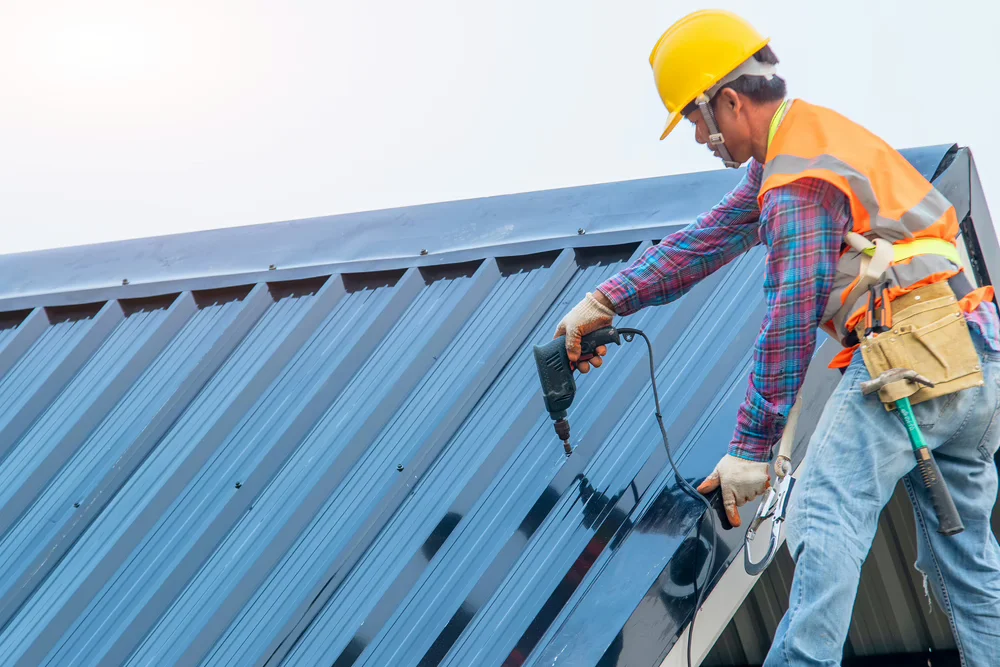
The solution is straightforward in concept but requires discipline in execution. Metal panels need fastening that allows free expansion and contraction.
A proper installation employs several critical components:
- Slotted fastening holes allow metal panels to slide laterally as they expand and contract without the fastener pulling at the metal itself.
- Specialty fasteners with wide washers are designed to flex without binding as the metal moves.
- Calibrated fastener tension allows movement while maintaining secure panel positioning.
- Flexible underlayment specifically designed for metal roofing accommodates panel movement without tearing or degrading.
Fasteners must be placed loosely enough to allow movement but tight enough to keep panels secure. Martin Roofing & Construction brings this expertise from hundreds of installations, ensuring each fastener is placed with precise tension calibration. Too tight restricts movement; too loose compromises panel security. This balance is what separates professional installations from amateur work.
The underlayment matters significantly. Proper metal roofing uses underlayment that flexes with the metal. Older materials become brittle over time and can’t accommodate the panel movement the system requires. When Martin Roofing & Construction installs a metal roof, they select underlayment specifically suited to metal roofing applications, not generic materials that might work with other systems.
| Installation Method | Fastener Type | Movement Allowance | Year 5-10 Leak Risk | Durability |
| Fixed fasteners (improper) | Standard screws | None | Very High | 8-12 years |
| Slotted fastening system (proper) | Specialty fasteners | 1.5-2 inches | Very Low | 40+ years |
Why Most Roofers Get This Wrong
Several factors explain why improper thermal expansion installation is so common:
- Delayed problem emergence: A roofer using improper methods might not see complaints for five to ten years. By then, they’ve installed dozens of other roofs, and homeowners may not trace problems to the original installer. This lack of immediate consequence means minimal market incentive to do it correctly.
- Lack of metal roofing expertise: Many roofers trained in asphalt shingle installation approach metal roofing with those same techniques, which is fundamentally wrong. The materials behave completely differently. Commercial roofers in Yardley like Martin Roofing & Construction distinguish themselves by specializing in metal roofing installation, not treating it as an extension of traditional roofing work.
- Economic pressure: Proper metal roofing installation takes longer and is more technically demanding. A roofer paid by the job rather than the hour might cut corners to finish faster. Improper installation is faster and cheaper in the short term.
- Manufacturer guidance gaps: Many metal roofing manufacturers don’t provide clear enough guidance, and some roofers simply don’t read installation instructions thoroughly. Professional contractors like Martin Roofing & Construction maintain ongoing relationships with manufacturers and stay current with best practices and product specifications.
Warning Signs of Improper Installation
If your metal roof is already installed, assess whether thermal expansion was considered:
- Fastener pattern: Look for slotted holes rather than fixed holes. Proper installation shows evidence of slotted holes.
- Fastener tightness: Proper fasteners should allow panels to move slightly when pushed. Completely rigid panels indicate problems.
- Visible buckling: Significant waves or buckling suggest expansion and contraction stress is already affecting panels.
- Water stains: Interior ceiling stains, particularly around fastener locations, are classic signs of thermal expansion failure.
If you’re experiencing these issues with an existing roof, Martin Roofing & Construction can assess whether improper installation is the culprit and determine whether repair or replacement is the most cost-effective solution.
Long-Term Financial Impact
Proper metal roofing installation costs slightly more upfront, perhaps 5-10% additional cost. But consider the alternative: water damage from thermal expansion failures can cost tens of thousands of dollars in interior damage, mold remediation, and structural repairs.
When you seek out professional roof installation in Holland, PA, you preserve warranty protection. Most manufacturers exclude damage caused by improper installation from warranties. With proper installation from a knowledgeable contractor, the manufacturer’s warranty remains intact, and you have recourse if issues arise.
Beyond warranty protection, there’s peace of mind knowing your roof is built to last and that thermal expansion was considered in every installation decision. Martin Roofing & Construction stands behind their work with meaningful warranties precisely because they know their installations meet rigorous standards.
Hiring the Right Contractor
Ask potential contractors specific questions about their thermal expansion approach. A knowledgeable contractor will clearly explain slotted holes, fastener specifications, and spacing requirements. Vague answers are a signal to keep looking. Request examples of completed installations and ask how many total metal roofing projects they’ve completed. Martin Roofing & Construction can provide documentation of hundreds of metal roofing installations, demonstrating consistent expertise and experience.
Ask for references from homeowners whose roofs have been installed for at least five years, and specifically ask about leak issues. References from long-term customers are the best indicator of whether thermal expansion problems show up in a contractor’s work.
Ask your contractor to explain their thermal expansion approach before work begins. Martin Roofing & Construction welcomes these questions and provides thorough, transparent answers. Their confidence in their methods reflects decades of professional experience and a commitment to doing work that lasts.
When you invest in a metal roof, you’re making a long-term commitment. That commitment can only be fulfilled with precision and knowledge. Reach out to the professionals like Martin Roofing & Construction who understand that metal roofing requires specialized techniques and thermal expansion considerations.
Your roof’s performance over the next four decades depends on fastening decisions made during installation. Make sure those decisions are made by professionals who understand what’s at stake and have the expertise to get it right.